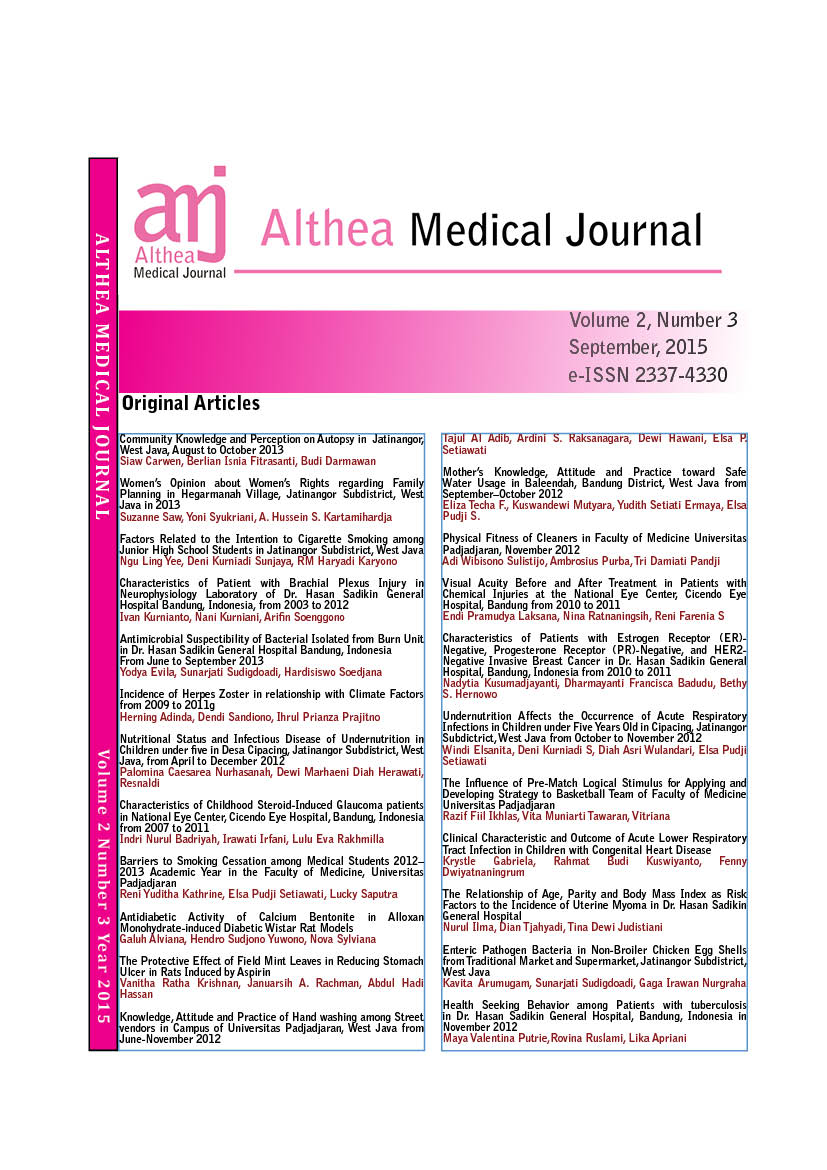
Antidiabetic Activity of Calcium Bentonite in Alloxan Monohydrate-induced Diabetic Wistar Rat Models
Keywords:
Calcium Bentonite, Diabetes Mellitus, Hyperglycemia, Traditional medicine, Wistar ratsAbstract
Background: Calcium bentonite is a natural clay that has the ability to absorb toxins and metabolite excess substances and often referred to as healing clay because it is used traditionally. This study aimed to determine the ability of local calcium bentonite to absorp high blood glucose..
Methods: This study was an experimental study using 20 female Wistar rats and divided into two groups consisting of Group I (control group, n=10) and Group II (calcium bentonite group, n=10). Diabetes in rats was induced by alloxan monohydrate 150 mg/kg body weight intraperitoneally. Examination of blood glucose was performed three times; in the beginning of study, 72 hours after alloxan monohydrate induction, and four days after the given interventions. Blood glucose levels in mean values were analyzed using t-independent test. Statistically significance was considered when p<0.05.
Results: Oral calcium bentonite of 1g/kg body weight significantly lowered blood glucose level relatively to the control group with average value of 131.30 mg/dl (p=0.01).
Conclusions: Calcium bentonite significantly lowers blood glucose levels.
DOI: 10.15850/amj.v2n3.562
Downloads
Published
Issue
Section
License
- Authors retain copyright and grant Althea Medical Journal right of first publication with the work simultaneously licensed under a Creative Commons Attribution License that allows others to freely share and remix the work with an acknowledgement of the work's authorship and initial publication in Althea Medical Journal. Althea Medical Journal is licensed under CC BY-NC 4.0
- Authors are permitted to copy and redistribute the journal's published version of the work non-commercially (e.g., post it to an institutional repository or publish it in a book), with an acknowledgment of its initial publication in Althea Medical Journal.